

Based on Canada's 2021 census, about 33% of Canadians are renters. If you look at younger people, ages 15 to 29, that number jumps to 66%. So nearly two thirds of young people in Canada are renting. It is natural, then, that if a politician in the Canadian government wants to win over the younger generation, they go after the rental market.
That is exactly what the Liberal government did a few days ago. Justin Trudeau, Canada's Prime Minister, stepped in front of the cameras and announced a plan to help renters become homeowners more easily, with new support measures for tenants set to come in the next budget. I'm Moe Asgarian, a senior real estate broker in Toronto, and in this article I'll explain what this new plan is and how it affects both tenants and landlords.

Point One: Rental Price History
Right now, every home rented in Ontario uses a form called the Ontario Standard Lease Agreement. I've actually walked through how to fill out this form in detail in another video on this channel. In Canada, each province has its own rental rules, so this form differs from province to province. Now the government says these should be made uniform across the whole country, a national standard lease agreement, standardized federally.
What this means is that the rental price history of homes would be announced transparently, and everyone across Canada would have access to it. The government is doing this for more transparency, so tenants have better information and stronger tools to negotiate and ask for prices on rental units.

My personal opinion? This does not help renters much. Anyone looking to rent can already easily find rental price trends through social media. More importantly, the market sets the rent. Say I list a home for $2,300 a month, and the history shows it was last rented two years ago for $2,000. Can the applicant come and say, I want to pay $2,000 instead of $2,300? As long as the landlord has the upper hand, no. He gives the home to the next applicant who is happy to pay $2,300. The market sets these numbers, and you cannot change prices by decree.
It works the other way too. Imagine condos that are almost ready come to market little by little and supply increases. Rents have to come down over time. A landlord can say I got $2,300 last year so I want the same this year, but clearly no. If the price drops, my tenant rents at the lower price. Look at what happened in the condo market: many units came up for rent, tenants moved out, and landlords had no choice but to rent at much lower numbers. Nobody could rent at last year's price. We see the same thing in the buy and sell market. The sales history of homes is known, but what ultimately sets the final price is the market on that day. Transparent price history is great and helps people make better decisions, but I'm honestly not sure it can be a strong tool for negotiating with landlords.

Point Two: Credit Score
Renters pay a lot of money for their housing every month, and now the government wants to roll out a program where paying rent monthly turns into a credit score, the same way paying or not paying a loan moves a homeowner's credit score up or down. The idea is for the same situation to apply to tenants: if they pay rent on time each month, their credit score goes up, and if they do not pay regularly, their credit score gets damaged.
This is a really good idea. A tenant who pays rent on time every month, you can trust that they will likely pay their loans on time too. That good payment history really should count as part of credit history. And on the flip side, when a tenant is late on payments, it should affect their credit history, because the chance they pay loans late is higher. Right now, a bad-paying, unreliable tenant faces no impact on their credit score, then goes and takes out a loan, gets a line of credit, and keeps up the same bad behavior there.
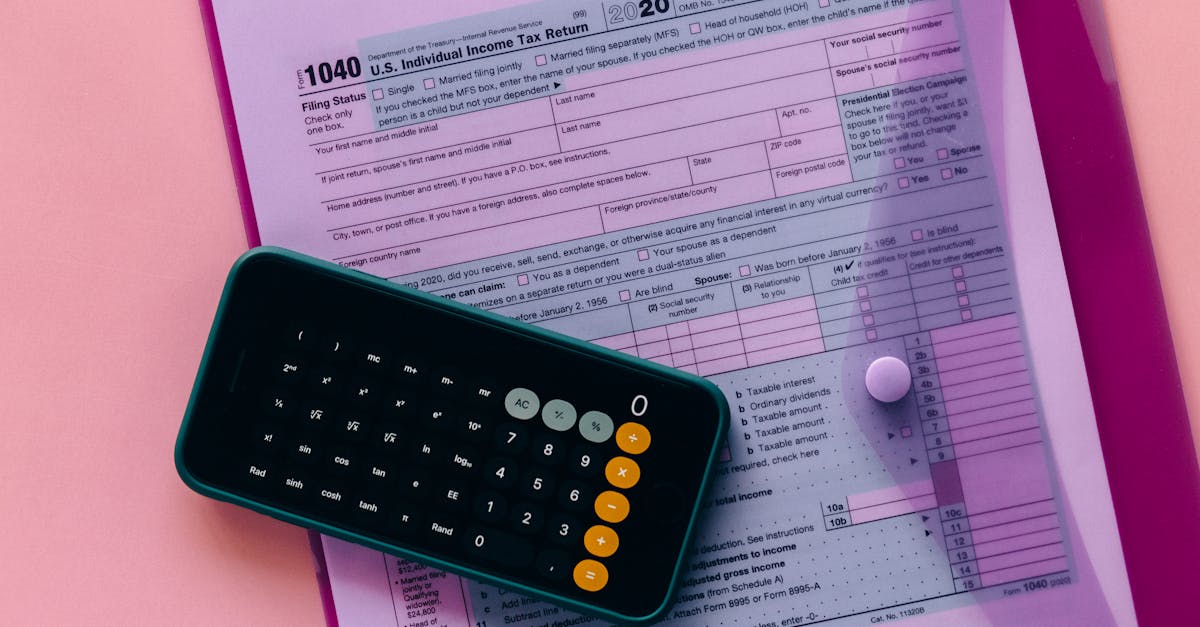
I think this is encouraging news both for landlords and for tenants who are good payers. Trudeau promised to work with all financial institutions, lenders, and banks to make this happen. I hope soon the quality of rent payment has a direct effect on people's credit history.
Point Three: The $15 Million Fund
I've talked in previous videos about how, for several reasonable and legal reasons, you can evict your tenant. Two of them: one, you want the unit back to live in yourself. Two, you want to sell the home to an end user, someone who wants to move in themselves. But there is another legitimate, acceptable reason to remove a tenant, which we call a renoviction. Renovation means rebuilding, and eviction means removing the tenant.

This means if you want to do a major renovation in that unit, you can remove the tenant living there. It is not as simple as it sounds, though. For this you need one of three conditions. First, you intend to fully demolish the rental unit. Second, you need the unit vacant to carry out repairs, but your tenant has the right to return after your work is done, and you must offer them another unit during that period that they are satisfied with. Third, you intend to convert the residential unit into a non-residential one.
The government's argument is that landlords use this renovation tool to push tenants out of their homes. So it created a fund and allocated $15 million to help tenants stop this. The money goes to legal organizations in the provinces so they can more easily help tenants. The goal is that if a landlord is abusing this law, it can be stopped.

In my view, penalizing landlords who abuse the law is the right idea. But I hope tenants who break the initial agreement and the rules are penalized to the same degree. Some tenants hold the home they live in hostage and demand cash in exchange for handing over the keys. Let me explain with a simple example. While I was recording this video, I got a call from an agent who wanted to bring an offer on a home we listed with a tenant in it. Unfortunately, the tenant is not cooperating with us, and they have essentially taken our client's home hostage. We want to accept the offer, and they should move out within 60 days, but they say they cannot move in 60 days and cannot find a place. The purchase transaction is stuck, waiting to make sure the tenant leaves.
You need to know that the purchase agreement has nothing to do with the lease agreement. They are two separate contracts. If you cannot close the sale because the tenant has not moved out, you cannot go and sue the tenant. Unfortunately, that is a legal gap that exists right now. Another example that made the news: a tenant in the City of Vaughan rented a home, did not pay rent for 2 years, and owed $400,000. People went and protested in front of the house. Because of this legal gap, when a tenant does not pay rent, nothing happens to their credit history, so they take no hit. Meanwhile, if a homeowner misses one mortgage payment to the bank, the credit score drops and the bank can come after them. I hope changing these rules brings a better situation for both groups.
So What Does It All Mean?
To sum up, the plan comes down to three things: one, price history. Two, credit score. Three, the government's $15 million fund. In my view, overall this is a good plan for both landlords and tenants. Of course, for good landlords and for good, reliable tenants. I hope this explanation is useful to you. My colleagues at Team Asgarian and I are here to help you make better decisions in this rental market, whether you are a landlord or looking for a home to rent. If you'd like a straight answer for your own situation, fill out the form below and book a free consultation. Stay well and take care.
Frequently asked questions
Will a national standard lease really lower my rent?
Probably not on its own. Moe's view is that rent is set by supply and demand, not by past pricing. Even if you can see a unit rented for $2,000 two years ago, a landlord asking $2,300 today will simply rent to the next applicant who pays it. Price history adds transparency and helps you make better decisions, but it is not a strong negotiation tool while the landlord has the upper hand.
How would rent payments affect my credit score under the new plan?
The government wants your monthly rent payments to be reported like loan payments. Paying rent on time would raise your credit score, and paying late or missing payments would lower it. Justin Trudeau said the government will work with financial institutions, lenders, and banks to make this happen, so a tenant's payment history could directly affect their credit history.
What is the $15 million fund for?
It is money the government is giving to legal organizations in the provinces so they can more easily help tenants. The goal is to stop landlords who misuse the renovation rule, called a renoviction, to push tenants out. Moe agrees landlords who abuse the law should be penalized, but hopes tenants who break the rules, like not paying for months, are penalized too.