
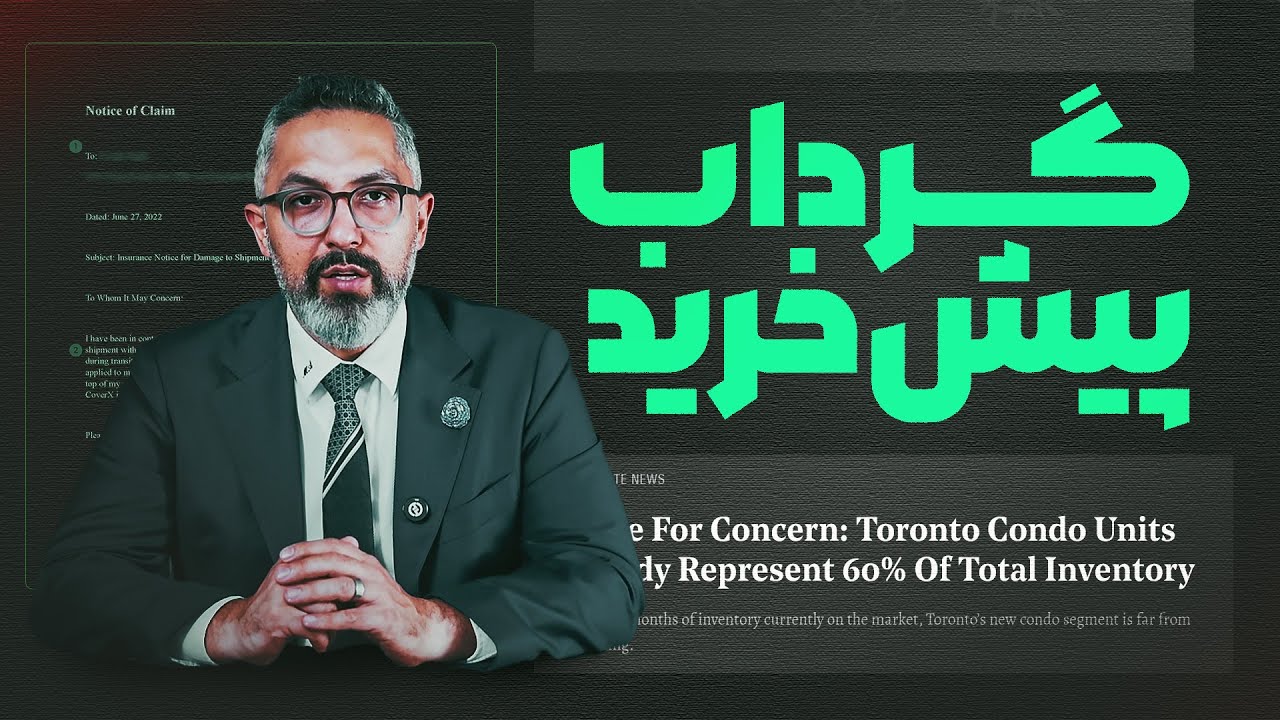
A lot of people call me and say the same thing: we pre-bought a condo, closing is coming up fast, and we have no idea what to do. In this video I want to answer that question directly. If you pre-bought a unit, what are your real options for getting through this stage? And if you are thinking about buying an assignment, this is useful for you too, because it shows you exactly what kind of market you are about to walk into.
I'm Moe Asgarian, senior real estate broker in Toronto, ranked 47th in the RE/MAX company worldwide. Thank you for following the Team Asgarian channel. Talking about pre-construction problems has become almost repetitive at this point, and if you have followed my channel over the last year or two, you have heard me say many times why it is better not to pre-buy in this market and to look at resale instead.

The Condo Market Right Now
We know the condo market is quiet. There are a large number of condos across the GTA listed for sale with no buyers for them. So this is not a good time to be selling a condo. But the real question is this: between holding a pre-construction unit or selling it through an assignment, which one hurts less?
Selling the Assignment
Let's look at the assignment route first. The first thing to understand is that selling an assignment is not easy at all. To put it simply, it is nothing like a normal sale or the regular resale market. It is a completely different experience. Because of that, a large share of buyers genuinely prefer not to get involved. That alone can drag down the price of the unit a lot.

Picture this: someone has to pass up plenty of finished, condition-free condos and instead buy an assignment and step into the legal side of it. Naturally, it has to make real financial sense for them. My experience says that if you are in a position where you are forced to sell the assignment, you may have to sell it around 20 percent below price and bring the number down. Maybe then you have not lost. So what do you do? Either sell cheap, or do the math and see whether it is worth holding the condo instead.
Step One: Talk to a Lender
The first step here is to go to a mortgage broker or the bank. Do not run the numbers yourself. Hand your documents to a mortgage advisor or a bank specialist and let them tell you how much you can borrow. This is step one for buying any home, and it is no exception here. The answer the lender gives you is very telling. Sometimes you find that with 20 percent down you can get a variable mortgage. Sometimes you find you simply do not get approved.

Sometimes that rejection is about your own situation. Other times the bank sends an official appraiser to value the condo you pre-bought. In today's pre-construction market that is now reaching closing, there are many projects where, unfortunately, the price was much higher than resale, and today the bank's appraiser will not appraise that project at what you paid.
The Appraisal Gap, With Numbers
Say you went into downtown Toronto and bought a one-bedroom condo for 650,000 dollars with no parking. That is roughly 1,300 dollars per square foot for a 500 square foot unit downtown. Today in the resale section, comparable condos are selling for less, and on 500 square feet that works out to tens of thousands of dollars cheaper. So you bought at 650,000, but if that condo were in the resale market today the value might come in much lower, and the bank's appraiser comes back and says the price you paid the builder was high. In plain language: the bank's appraiser does not accept the price you paid and sets a lower one. That means you have to cover more of the gap in cash.

Now, some banks on these pre-construction projects have offered what is called a blanket mortgage or a blanket appraisal. What does that mean? For example, RBC negotiated with the developer and said they will accept the final prices the developer sold to clients, meaning they do not send an appraiser. So if you go to RBC, the price the bank recognizes is 650,000. But if you go to TD, that number might be lower. So it is better for you to get the loan from the bank that honors the price. This is a very important step: you need to know which bank the project works with and which bank has set up a blanket appraisal for it. And sometimes you are not approved because of your own financial situation, so you end up going to a B lender with higher interest rates.
Doing the Math on Closing
This is the first calculation to run. Take the number the lender gives you and see what closing the home and carrying the mortgage costs you per year. And the cost is not only the mortgage. For a condo around 600,000 dollars you might get 2,200 in rent, and once you add up all your carrying costs you are losing somewhere around 1,200 to 1,400 dollars a month. Over four years that is a loss, but a large chunk of it is your own principal, so the net loss is smaller than it looks. Roughly speaking, closing this home costs you a few thousand dollars a year in real loss.

There is one assumption baked into this: we did not factor in the occupancy fee and that whole period before you get the mortgage and register the title. Let me put it bluntly: occupancy is more expensive than the mortgage, and it makes this math worse. Now compare that to the assignment route, where you might give up over 125,000 dollars. Over a four year window that is far more than the smaller figure we just calculated together. That said, sometimes a person genuinely cannot get a mortgage, because of the appraisal or their work situation, or even if they get the loan they cannot handle the carrying cost. This is where it becomes person by person.
Whatever You Do, Do Not Walk Away
In general, if you can get a mortgage, close the condo, and hold it for the next few years, you may have made the better decision. Try to do this with advice from good agents, and stay hopeful that your condo goes up sooner than you expect. One brotherly piece of advice: do not for one second think about abandoning the condo. Do not just fail to close and let it go. Take one of the two roads: either close, or sell through an assignment and take the loss.

Because if you walk away and do nothing, it can end in financial and legal trouble for you. What does that mean? The builder, the developer, will not just let you go. If they know you have status here, a home, assets, property, savings, the developer's lawyer is on staff and it costs them nothing extra. The first thing they do is sue you, serve a notice of claim, and go to court to win a judgment. This has happened many times before and the developers won. So in almost every case the builder will win that court fight, and once they win they go after whatever you have: your income, a second property, your assets. They place a lien, force you to sell, and make you cover their losses. I promise you, you will pay far more in penalties and costs.
A Word for Future Buyers
Pre-buying is a risky purchase, and sometimes it can be very expensive, especially in a market like this where you can buy a finished condo cheaply. It may not be in your interest to get yourself tangled up in pre-construction. I hope this was useful. If you'd like a straight answer for your own situation, fill out the form below and book a free consultation. Stay well and take care.
Frequently asked questions
Should I sell my pre-construction condo as an assignment or close on it?
It depends on your numbers. Selling an assignment is difficult and most buyers want a steep discount, often around 20 percent below market, which can mean a six-figure loss. If you can qualify for a mortgage and afford to hold the condo for a few years, closing is frequently the smaller loss. Get advice from a good agent and a mortgage professional before you decide.
Why won't the bank appraise my condo at the price I paid the builder?
In many current pre-construction projects the builder's price was well above today's resale value, so the bank's appraiser values the unit lower than what you paid. That gap means you have to cover more of the difference in cash. Some banks have negotiated blanket appraisals with the developer and will accept the builder's price, so it pays to find out which bank the project works with.
What happens if I just walk away from my pre-construction condo?
Do not do it. The builder will not let you go: they will sue you, serve a notice of claim, and in most cases win in court. Once they win they can place liens on your assets, force the sale of other property you own, and recover their losses from you, plus penalties and extra costs. Walking away is almost always the most expensive option.