
One of the questions people in Toronto ask me most often is this: how can we rent out our condo or our home on a short-term basis? The short answer is that you have to register this activity with the City of Toronto, pay the fees, and pay attention to the limits, like the one that says you can only rent your place out for a limited number of nights.
I'm Moe Asgarian, Principal Real Estate Broker in Toronto and ranked #47 in the RE/MAX company worldwide. Welcome to the Team Asgarian YouTube channel. If you want to stay on top of the latest news in Canada's housing market, you can subscribe to my channel. There is a lot to say about short-term renting condos in Toronto, but in this article I'll try to give you the key points so you can put them to use.

What Counts as a Short-Term Rental
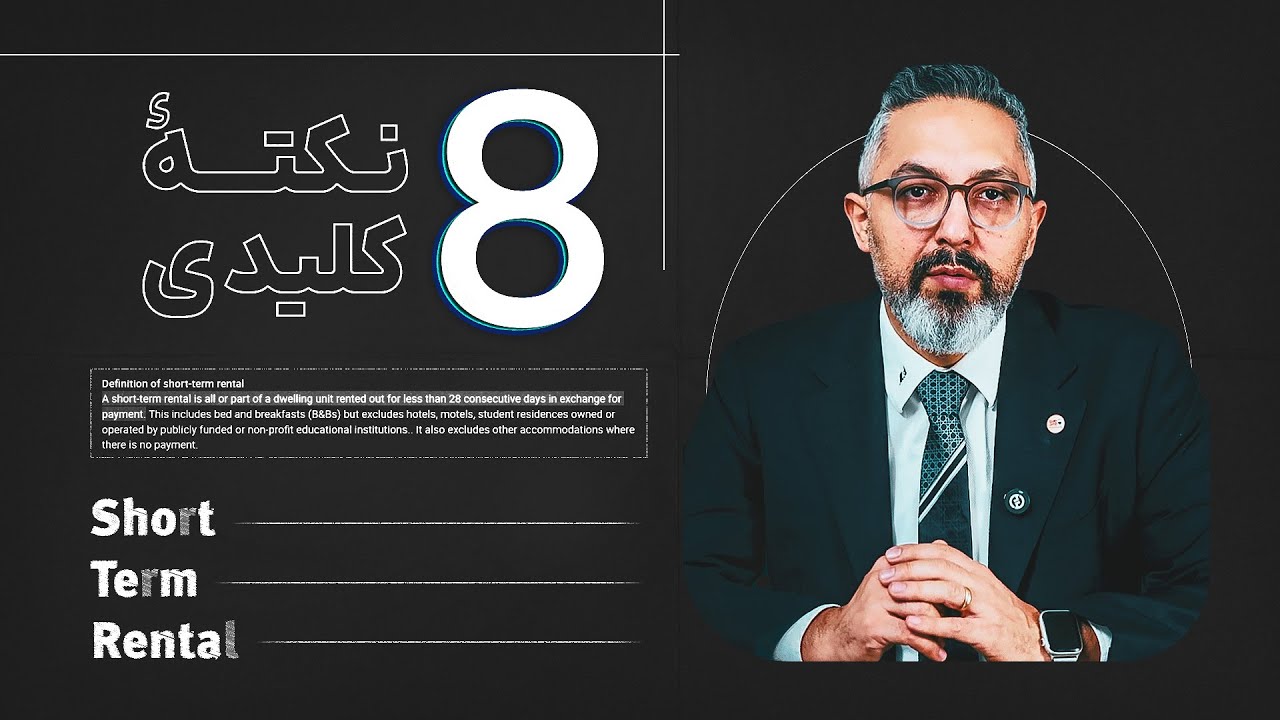
The first point is the definition of a short-term rental. The definition is this: you want to rent out all or part of your home for fewer than 28 days. So if you're renting the place out for three months or six months, that is no longer a short-term rental and it falls under long-term rental rules.
It Has to Be Your Primary Residence
A rule you need to know is that you can only short-term rent a home that is your primary residence. Your primary residence is the place where the bills, the insurance, the taxes, all of it comes under your name and where you are actually living. So if you own several properties, you can't use the ones that aren't your primary residence for short-term rentals. By law, those properties can only be rented long-term.

Registration, Tax, and the City's Rules
On top of that, there are some rules you have to follow. For example, anyone who wants to short-term rent their home has to register on the City of Toronto portal. For every booking, you have to collect and pay the 4% Municipal Accommodation Tax, which is the MAT. You have to report and submit this tax once every three months. You register online, you pay the fee, and keep in mind that you have to include your registration number in every listing you post.
During the registration process, you may be invited for an in-person interview with the City. On top of that, the City can carry out an annual inspection of your home. Remember too that registration has to be done every year. If you don't register one year, you can't register the next year and you lose that opportunity. The law says the host has to have someone available 24 hours a day for emergencies, and you also have to post an emergency exit map in the place you're renting out.

The 2025 Fees and the Night Limits
Another important matter is the cost of registration and renewing your permit. Since the start of 2025, the registration and renewal fee has gone up, and this year it has reached $375. There are a few more things you absolutely have to follow. For example, if you're renting out the whole home, you can do this for 180 nights a year in total and no more. You have to clearly state whether you're renting the whole home or just part of it.
If you're a tenant yourself, you have to get permission from the landlord to be able to short-term rent the place. Rental apartments are usually under company management, so you need to make sure your lease allows this. In general, you can short-term rent a condo that is your primary residence, but in some buildings this may not be legal and may be banned, and the condo corporation may have set fines for doing something like this, which lands you in trouble.

Renting a House: Whole Home vs. Rooms
If you have a house and you want to short-term rent the whole thing, you can rent it for a maximum of 180 nights a year as long as it has a separate entrance, kitchen, and a dedicated bathroom. If you're going to rent out only part of the house, you can rent up to three rooms with no time limit.
Before You List, Check Your Rules
These were the main points that came to mind that I thought I should mention about short-term renting a home in the city of Toronto. I'd love it if you have experience in this area that you think could help, leave us a comment here so we can talk about it together. And if your property, or the apartment you're looking at for this, is in a city other than Toronto, you definitely have to check that city's municipal website and know their rules before you do this. Stay well and take care.

Frequently asked questions
What counts as a short-term rental in Toronto?
A short-term rental is renting all or part of your home for fewer than 28 days at a time. If you rent for three or six months, that is no longer short-term and falls under long-term rental rules instead. The 28-day line is what decides which set of rules applies to you.
Can I short-term rent a condo or property that I don't live in?
No. You can only short-term rent the home that is your primary residence, meaning the place where your bills, insurance, and taxes are under your name and where you actually live. If you own several properties, the ones that are not your primary residence can legally only be rented long-term.
How many nights per year can I rent out my home in Toronto?
If you rent out the entire home, you can do it for a maximum of 180 nights per year and no more. If you rent only part of your home, you can rent up to three rooms with no night limit. You also need to state clearly whether you are renting the whole home or just a portion.