

Donald Trump is back in the White House, and the word everyone in Canada keeps repeating is tariffs. I usually stick to the Toronto housing market here, but this one is different. What happens at the US border feeds straight into our economy, our jobs, and yes, the price of a home in the GTA.
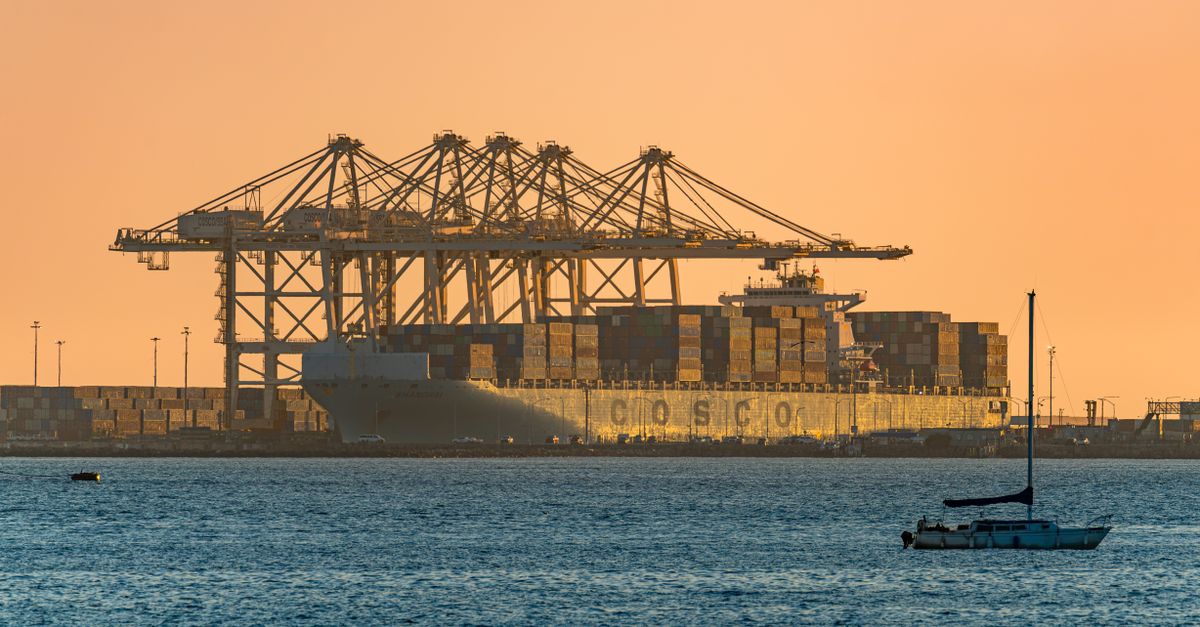
So I pulled the questions that matter most for Canada and worked through them one by one. Here are the five I keep getting asked: how big are these tariffs, how fast will they land, what is Trump actually after, which laws let him do it, and what could slow him down. Before I start, one number to sit with. Roughly a quarter of everything Canada sells to the world goes to the United States. That is the size of what is on the table.

The legal tools Trump can reach for
Here is the uncomfortable part. In the last 100 years, we have never seen a US president use these powers against Canada with this kind of force. The president has several legal routes. One comes from a 1962 law, Section 232 of the Trade Expansion Act, which lets him impose tariffs on national security grounds. He used it in his first term for steel and aluminum. Another is a 1974 law that lets the president penalize countries for unfair trade practices, and both Trump and Biden leaned on it against China. There is also a 1977 law, the International Emergency Economic Powers Act, which has never been used this way in the US. That one would require declaring a national emergency first, so it is less likely. But Trump is hard to predict, so nothing is off the table.
How big could the tariffs get
Most of us have heard the 25 percent figure. But since election day Trump has floated a lot of numbers: 10 percent on everything, 20 percent, 60 percent on imports from China, 100 percent on cars, even 1000 percent. That range tells you these numbers are a threat as much as a plan. He did not arrive at 25 or 10 through some careful study. He said them to make other countries nervous, and it worked. Here is the problem. Every one of those numbers is a disaster for Canada, short term and long term. Picture a manufacturer with a plant here and customers in the US. They start thinking about moving the plant south. Honda is already making that kind of decision.
How fast will this move
Trump's own pick for Treasury has said the policy is not finished and they are still working on it, which is fair. Putting tariffs on this much trade is not simple. One scenario is that they go slow, roll it out in pieces, and watch how markets react. There is also a domestic reason to take it easy. Republicans badly want to make their tax cuts permanent, and that needs three-fifths of the Senate. Plenty of senators dislike tariffs. Move too fast and too hard, and they put their own tax bill at risk. So a gradual approach is very possible.
What Trump actually gets out of this
Trump's read is that he has to do this, for three reasons. First, he thinks trade with some countries, China especially, is unfair, and that China gains far more from the relationship. Tariffs are his way of tilting the balance back. Second, tariffs raise money for the federal government, and no administration turns down revenue. Third, he wants leverage. He is walking into talks on Ukraine, NATO, Russia, China, and the Middle East, and he wants to arrive holding cards. In his view, the wins he can squeeze out with this tool are worth it for the US.

What could actually stop him
A few people have hoped the courts step in. Most experts think that is unlikely, since judges tend to give the president a lot of room, especially when national security is the argument. The real brake is the US stock market. Tariffs are not good news for stocks, and Trump does not want his presidency to open with headlines about a market selloff. That is bad press for him. The market already expects some new tariffs, but tell it that a 25 percent tariff on Canadian imports starts tomorrow and it will not react well. That reaction may be the single biggest thing that gets Trump to ease off.
None of this changes the fundamentals of owning a home in the GTA, but it does change the mood, and mood moves markets. If you are trying to figure out what a shift like this means for your own buying or selling plans, fill out the form at the bottom of this page or book a free consultation and let's talk it through. Stay well and take care.
Frequently asked questions
How large is the tariff Trump has proposed on Canada?
The number most quoted is 25 percent on imports from Canada and Mexico, but Trump has also mentioned 10 percent, 20 percent, 60 percent on China, 100 percent on cars, and even 1000 percent, mostly as a negotiating threat.
Could the courts stop the tariffs?
Most experts think it is unlikely. Judges usually give the president wide latitude on trade, especially when the argument is national security.
Why does Trump want tariffs at all?
Three reasons: he sees trade with countries like China as unfair, tariffs raise revenue for the federal government, and they give him leverage in diplomatic negotiations.