

As of late November 2025, variable mortgages in Canada were genuinely cheaper than fixed. Some variable rates sat below three year, four year and five year fixed terms, and an insured variable mortgage could be arranged at around 3.5%. Variable is the better bet if you can absorb movement, but there is no answer that is correct in advance.
I am Moe Asgarian, a Principal Real Estate Broker in Toronto with RE/MAX, ranked #47 worldwide and in the top 1% in Canada, and this was the question almost every client put to me that month. The Bank of Canada cut its policy rate several times and turned the page on years in which fixed was the obvious choice.

Why Variable Became Cheaper Than Fixed
The Bank of Canada brought the policy rate down repeatedly, and for the first time in a long while variable mortgages became attractive options again. In late November 2025, when I was looking at live numbers, some variable rates were below three year, four year and five year fixed rates, and an insured variable mortgage could be arranged at around 3.5%. For a borrower with cash behind them, someone whose budget is not damaged by a payment that moves, those numbers are hard to ignore. That is especially true if you believe the policy rate still has room to fall by the end of 2026.
The 2022 Lesson Nobody Forgot
There is a reason many people still will not touch variable. In 2022 the Bank of Canada started raising its policy rate and everyone holding a variable mortgage had a very hard time. A lot of borrowers took the lesson from that experience and refuse to be in that position again, so they will not take the risk even when the spread looks good. I do not think that is irrational. A low rate you cannot sleep through is not a good rate.

You Can Convert to Fixed, With One Catch
One real advantage of a variable mortgage is that you can convert it to a fixed rate mid term, whenever you want, without paying a penalty. That lowers the stakes considerably, and it is why variable can be considered more calmly than people assume. Read your own documents though, because every bank and every mortgage has its own conditions and the options are not identical across lenders.
The usual catch is term length. You generally cannot take a new fixed term shorter than the time remaining on the variable. If three years are left on your variable mortgage and you want to convert, the shortest fixed you can take is a three year. You can choose four or five years, but you cannot take a one year.

Variable Payment or Fixed Payment
If you decide the risk suits you, know that there are two kinds of variable mortgage. With a variable payment, the monthly amount rises and falls as the rate moves, which is straightforward enough. With a fixed payment, you pay the same amount every month, and when the rate falls a larger share of that payment goes to the principal instead of interest. Some borrowers prefer the second structure for exactly that reason: they would rather pay down the principal than hand over more interest. As of late November 2025, roughly one third of new mortgages were variable and two thirds fixed, and my expectation is that the variable share grows in the months ahead.
Three Mortgage Terms That Matter as Much as the Rate
Whatever you choose, there are three features to check on any mortgage. The first is the prepayment option. Most banks let you pay between 10% and 20% of the principal as a lump sum each year. On a $500,000 mortgage with a 20% prepayment right, that is about $100,000 in the first year, which cuts the interest you pay and lets you clear the mortgage sooner. There is usually also an option to increase the regular payment amount so the balance comes down faster.

The second is the penalty for breaking the mortgage or ending it early. Say you buy a home and take a mortgage, then want to sell two years later and pay the mortgage off. Variable and fixed are not the same here. On a variable you pay three months' interest as the penalty. On a fixed it is either three months' interest or the difference between the rate you took and the current rate, and that usually works out more expensive. So if you think there is a real chance you sell in the next year or two and repay the mortgage, variable gives you the cheaper exit.
The third is portability. Take a mortgage you can move to a new home without paying a penalty. Most mortgages from the big banks have this option, but watch the window. The transfer generally has to happen inside a short and specific period, something in the range of three months to get from the old home to the new one, and there are conditions attached to it.

What Could Move Rates Next
None of us can predict the future, which is why the variable or fixed question never has a correct answer in advance. The way the Canadian economy looked as of late November 2025, I expect the Bank of Canada will want to bring rates down again. Soon, though? I doubt it. My prediction is that the next cut lands next year, perhaps March 2026 or a little earlier, and that the size of the cut matters less than the psychological effect it carries.
The thing actually worth waiting for is a trade agreement between Canada and the United States. Until that happens, forecasting is very difficult. 2026 is the year the agreement between Mexico, Canada and the United States comes up for review, which makes it decisive for a great many things, interest rates among them. I hope Canada resolves its problems with the United States in 2026 and the economy finds some stability, rather than every hope resting on the central bank's monetary policy.
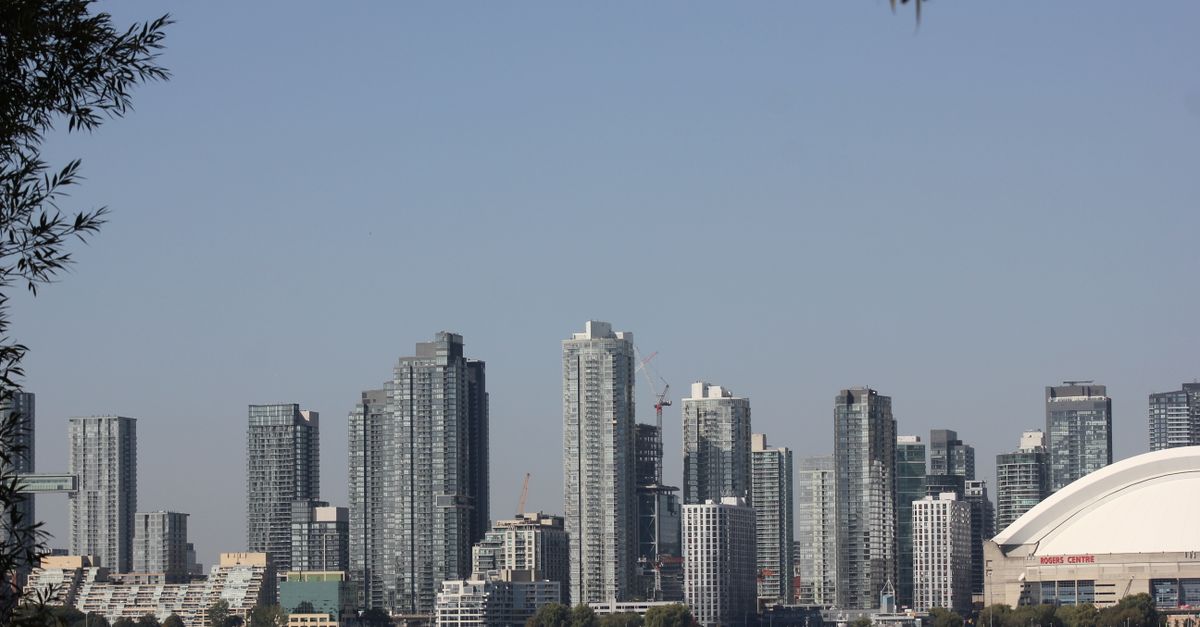
If you are weighing variable against fixed for a purchase or a renewal, fill out the form at the bottom of this page or book a free consultation and we will go through your numbers together. Stay well and take care.
Frequently asked questions
Was a variable or a fixed mortgage cheaper in Canada in late November 2025?
Variable. As of late November 2025 an insured variable mortgage could be arranged at around 3.5%, and some variable rates were below three year, four year and five year fixed rates. That reversed the situation Canadian borrowers had faced for several years.
Can you switch from a variable mortgage to a fixed rate without a penalty?
Yes. A variable mortgage can usually be converted to a fixed rate at any point during the term without paying a penalty. The restriction is the length of the new term, which generally cannot be shorter than the time remaining on the variable. With three years left you can take a three, four or five year fixed, but not a one year.
What is the penalty for breaking a mortgage in Canada?
On a variable mortgage the penalty is three months' interest. On a fixed mortgage it is either three months' interest or the interest rate differential between your rate and the current rate, and the more expensive of the two usually applies. Borrowers who may sell within a year or two often pick variable for that reason.