
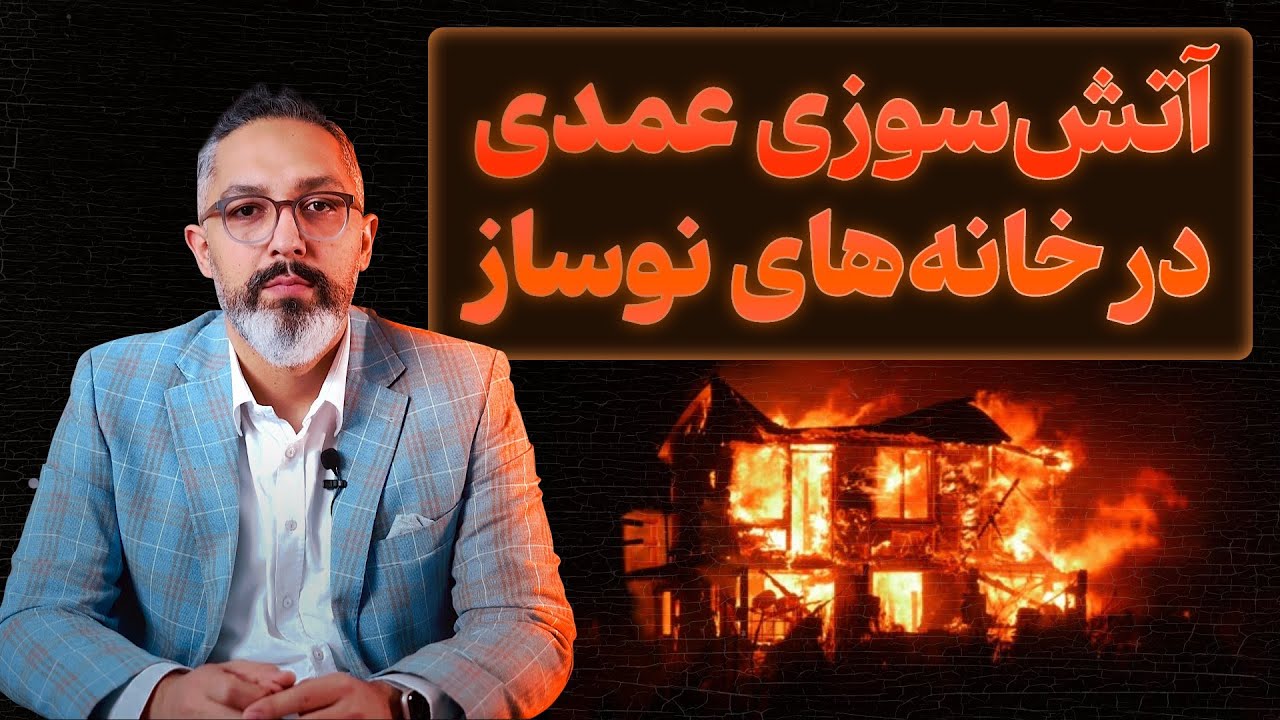
Almost every day you open the Toronto housing news, you see another brand-new, empty home that was set on fire on purpose. The latest one to make noise was a large mansion in Toronto's York Mills area, listed for sale at $14 million, that was deliberately burned down.
I'm Moe Asgarian, a senior Toronto real estate advisor, and on my channel I dig into the real estate stories that matter. In this video I want to talk more about this phenomenon and explain why someone would turn a brand-new home into ashes.

What Actually Happened
In mid-December 2023, four people in a black Mercedes drove up to a luxury mansion in Toronto's York Mills area at around 6:30 in the morning and deliberately set it on fire. Nobody was inside, nobody got hurt, and the firefighters controlled and put out the blaze very quickly. But here is the thing about this property: the home was 10,000 square feet and was listed for sale at an asking price of $14 million. That doesn't necessarily mean the home was actually worth $14 million, but that was the number on the listing.
And this is just one example. This has been happening a lot in recent months, and it isn't limited to Toronto. It's happening around Toronto too, in Brampton, Mississauga, and other places. You really can't say exactly how many of these fires are arson and how many are accidents. This particular fire was no accident, it was deliberate, but we can't say exactly what the motive or the specific reason behind it was.

How Higher Interest Rates Feed the Fires
Here is the point: as interest rates have gone up, fires on homes that still haven't sold have become more common. There are plenty of people who build homes but can't find a buyer. Why? Because interest rates went up, loans are expensive, and the person who built the home can't sell it and is making big monthly payments on that loan. The home just sits on the market, and sometimes the builder decides to burn it down on purpose and be rid of it.
The thing to understand is that insurance pays out for fire damage as long as the owner didn't start the fire. In these specific cases, though, if the insurers can find a link between the people who came to burn the home and the owner, again the payout may not happen. But proving that is not easy.

It's Not Just the Builders
Beyond the builders, there's another group: people who bought pre-construction, especially on the freehold side, detached homes. What has happened now? The banks have tightened up their lending, and these buyers can't get a mortgage anymore. For some of them the appraisal comes in and they see that the value of the home they're supposed to own is less than it was supposed to be, or less than what they had counted on.
That's why it's said that in some of these cases it's the buyers themselves who set the fires, though nothing has been proven so far. And sometimes it's genuinely a case of someone wanting revenge on the builder, so they come and deliberately set the home on fire.
Why This Ends Up Costing You
Insurance is paying attention to this. They're tracking how much these intentional fires are rising, and they respond two ways: they revise their contracts and rules, and they make premiums more expensive. What does that mean? It means the insurance a developer was paying to build a home goes up, and the cost of construction at the end goes up. Which means, in the end, prices go up again, and ultimately the person who wants to buy the home, meaning you, the real buyer, has to pay more money to buy a house.
Rising interest rates set off a lot of knock-on effects, and the intentional burning of these homes is one of them. I hope the rules and regulations change in a way that gets this under control too. My friends, I'd love to know what you think. If you'd like a straight answer for your own situation, fill out the form below and book a free consultation. Stay well and take care.

Frequently asked questions
Why would someone burn down a brand-new house?
With interest rates high, some builders finish homes they can't sell while still paying a heavy monthly loan, so a few set the property on fire to get rid of it and try to collect insurance. In other cases a pre-construction buyer who can no longer get a mortgage, or whose appraisal came in low, may be involved, and sometimes it is simple revenge against the builder. None of these motives have been proven in court.
Does insurance pay out when a new home burns down?
Insurance covers fire damage as long as the owner did not set the fire themselves. If the insurer can connect the people who lit the fire to the owner, the payout may be denied, but proving that link is not simple.
How do these fires affect ordinary home buyers?
Insurers are watching the rise in intentional fires, so they raise premiums and rewrite their contracts. That means the insurance a developer pays to build goes up, construction costs climb, and in the end the real buyer pays more for the home.