
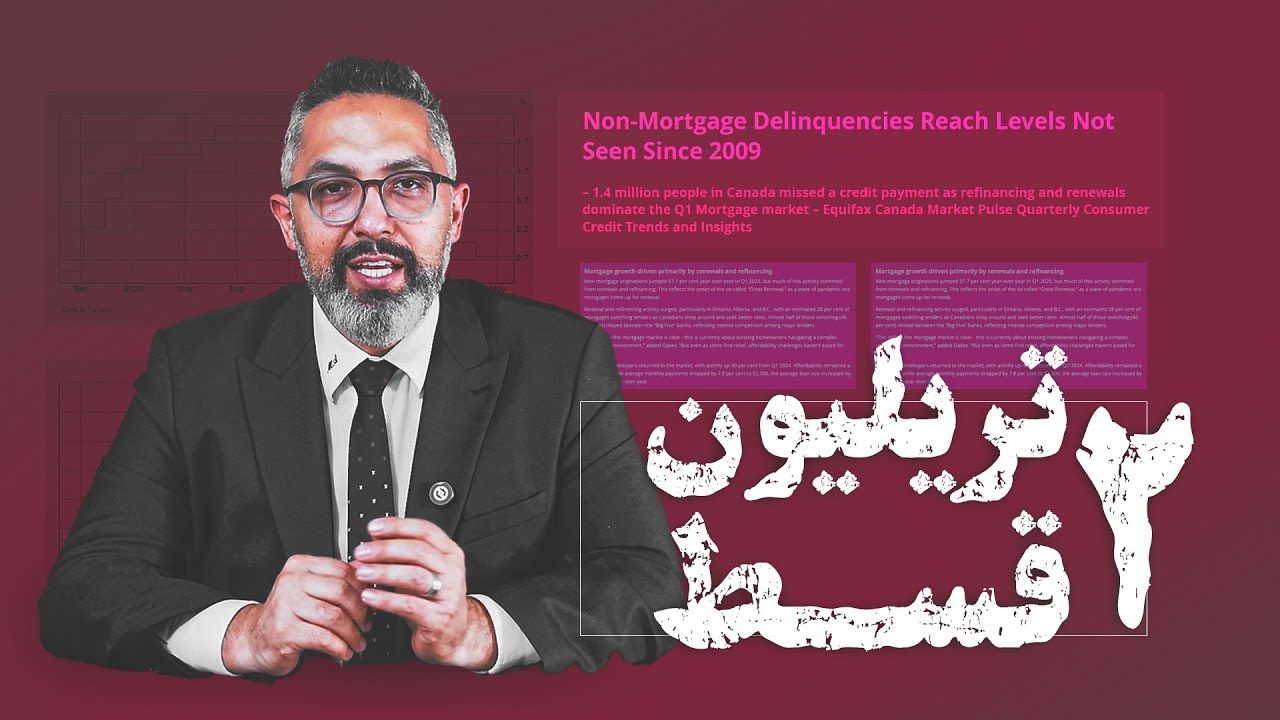
In the first quarter of 2025, more than 1.4 million Canadians, about one in every 22 people, missed at least one loan or debt payment. That figure comes from Equifax Canada's report on consumer credit trends in that quarter. Total consumer debt reached $2.5 trillion, about 4 percent higher than a year earlier, and mortgage holders held up better than borrowers without a mortgage.
I am Moe Asgarian, a real estate broker in Toronto. I write about the Toronto and GTA housing market, and about the Canadian economy when it points straight at housing, which this report does. As of June 2025 interest rates were high and economic growth was nothing to boast about, and a credit bureau as serious as Equifax was telling us that households were straining.

1.4 Million Missed Payments in the First Quarter of 2025
The headline number is the one to sit with. More than 1.4 million people in Canada failed to make at least one instalment on a loan or a debt in the first quarter of 2025, roughly one in every 22 people. By the end of that quarter, total consumer debt in the country had reached $2.5 trillion, about 4 percent more than a year earlier. Mortgage payments are only one part of that total. Average non mortgage debt per person was $21,859 in the quarter, and the main driver was a strong market for car loans, with a lot of people closing their purchase before vehicles got more expensive.
Credit Cards: Fewer New Accounts, Weaker Borrowers
After two booming years of new credit card issuance, new cards fell 10.3 percent in the first quarter of 2025. The detail that matters is who received them. Most of the new cards went to people with lower credit scores, which is a sign of financial pressure and of greater dependence on credit in that part of the population. Average monthly card spending per person was $17 lower in the quarter and sat at its lowest level since March 2022, with the largest drops in Ontario and British Columbia. Normally, spending down and payment rates up would mean households are getting healthier. Here payment rates were falling, especially among younger people, so the story reads as cutting back rather than switching from cards to cash.

The Great Renewal: Mortgage Activity Was Mostly Renewals and Refinancing
New mortgages in the first quarter of 2025 were up 57.7 percent against the same period in 2024, which sounds like a buying wave and was not one. Most of it was renewal and refinancing. People who bought a few years earlier when rates were low were renewing in 2025, and that wave is what people call the great renewal, because so many mortgages taken out during the pandemic were reaching their renewal dates. Refinance activity peaked in Ontario, Alberta and British Columbia. In that first quarter of 2025 about 28 percent of borrowers changed banks to get a better rate, and 46 percent of those moves happened between Canada's five big banks, which tells you how hard the banks were competing in early 2025. The centre of gravity in the market in that quarter was existing owners trying to refinance as well as they could, not new buyers.
Lower Payments, Bigger Loans
Rate cuts in the months before June 2025 pulled the average monthly payment down about 7.8 percent, to roughly $2,300. In the same stretch the average loan size went up 7.5 percent, which means people were buying more expensive homes rather than banking the relief. Affordability was still the issue. First time buyers make the point well: the market was not kind to them, and yet their activity in the first quarter of 2025 was 40 percent higher than a year earlier. Most owners do manage the renewal. A portion cannot stretch to the new rates and cannot keep up with the payments, and that portion is where the risk sits.

Ontario Is the Most Strained Province
Mortgage holders were relatively stable in the first quarter of 2025, because their rate was locked for the term. Borrowers carrying non mortgage debt only felt much more pressure, and in that quarter their delinquency rate was 8.9 percent higher than a year earlier, while the increase for mortgage holders was far smaller. Ontario remained the most strained province in the first quarter of 2025, with the biggest increases in delinquency rates across every credit product. The 90 day mortgage delinquency rate in Ontario reached 0.24 percent in that quarter, up 71.5 percent from a year earlier, with British Columbia next. Ontario also came first on non mortgage debt in the first quarter of 2025, where delinquencies rose 24 percent from a year earlier.
What I Take From This If You Are Buying or Renewing
Read the report as a whole and it says Canadians were saving harder while the pressure on them kept building, to the point where some had to push payments back. Two things follow from that. If you are renewing in the GTA, start early and shop the rate, because in the first quarter of 2025 about 28 percent of borrowers switched banks to get a better one. If you are buying, size the loan to the payment you could carry in a bad year, not the payment a lower rate makes possible today. The distance between those two numbers is exactly what the delinquency figures above are made of.

If you want to go through your own numbers, whether that is a renewal, a purchase, or a sale that depends on both, fill out the form at the bottom of this page or book a free consultation. Stay well and take care.
Frequently asked questions
How many Canadians missed a debt payment in the first quarter of 2025?
More than 1.4 million people, roughly one in every 22, missed at least one instalment on a loan or a debt in the first quarter of 2025, according to Equifax Canada's report on consumer credit trends for that quarter. Total consumer debt in Canada reached $2.5 trillion by the end of the quarter, about 4 percent higher than a year earlier.
What is the great renewal in the Canadian mortgage market?
It is the wave of mortgages taken out during the pandemic, when rates were low, reaching their renewal dates. It is why new mortgage volume in the first quarter of 2025 was 57.7 percent higher than the same period in 2024 even though most of that activity was renewals and refinancing rather than new purchases. Refinancing was heaviest in Ontario, Alberta and British Columbia.
Did lower interest rates make homes more affordable in 2025?
Only the monthly payment, and not for long. In the months before June 2025, rate cuts brought the average monthly payment down about 7.8 percent, to roughly $2,300, while the average loan size rose 7.5 percent. In other words buyers used the relief to buy more expensive homes, so affordability remained the core problem.