

Markham is not one market. Unionville is the oldest and usually the priciest, Angus Glen, Berczy and Wismer are the newer family subdivisions, Greensborough and Cornell are where younger buyers get in, and Cachet holds the estate lots. Decide on the lifestyle, the school and the commute first. The neighbourhood name comes last.
I am Moe Asgarian, a Principal Real Estate Broker in Toronto and the head of Team Asgarian, and Markham is one of the areas buyers ask me about most. One note on scope: this guide leaves Thornhill out, meaning the rectangle between Yonge and Highway 404 with Steeles to the south and Highway 7 to the north. Thornhill needs a guide of its own.

Where Markham sits, and what the commute really looks like
If you treat Union Station as the centre of Toronto, Markham sits to the northeast. Its southern boundary starts roughly at Steeles, and Highway 404 is one of its most important western edges. Heading north out of the city, the Don Valley Parkway effectively turns into Highway 404 past Highway 401. That highway matters to daily life in Markham, because it is one of the main routes into Toronto and into the rest of the GTA.
Downtown Markham to downtown Toronto is about a 40 minute drive without traffic. In rush hour, roughly 7 to 9 in the morning and 3 to 6 in the afternoon, the same trip can take 50 minutes or a full hour, and some days more. The car is not the only option. The GO Stouffville line covers an important part of Markham, running from Mount Joy in the north through Markham, Centennial, Unionville and Milliken, then through Scarborough into Union Station. From Mount Joy the ride is usually 50 to 60 minutes. Keep one thing in mind: many residents drive to the station, and a lot like Unionville GO fills up quickly in the morning, so what time you leave matters as much as how far you live from the platform.

For many Markham families, the school comes before the house
Markham is known for a large number of high-performing schools, and some families pick a neighbourhood almost entirely by catchment: choose the school, then look for a house inside its boundary. At the elementary level, two names come up over and over with buyers: William Berczy Public School in Unionville, and Nokiidaa Public School, which was previously known as Sir John A. Macdonald. On the Catholic side, St. Augustine is one of the best known high schools, sitting close to Cathedraltown.
Among public high schools, Unionville High School, Pierre Elliott Trudeau High School and Markham District High School are repeated most often, and part of the strong demand for Unionville is Unionville High School itself. Pierre Elliott Trudeau sits in the Angus Glen area with the surrounding neighbourhoods close by, and Markham District matters to families looking at Markham Village. Well known private schools are not scarce either. The important part is this: quality is not limited to those few names. Look at a school ranking map and you will find high-performing schools in many pockets of Markham, so a family that cannot get into one of the famous catchments has not necessarily made a bad choice.

Unionville: old trees, bigger land, top prices
Main Street Unionville is one of the prettiest parts of Markham, with historic buildings, plenty of restaurants and cafes, seasonal markets and a genuinely lively feel in summer. Follow Main Street north from Highway 7 and you reach the area around Toogood Pond, which is some of the best walking in Markham. The fabric here is old: big mature trees, some of them decades in place, and streets that feel like a settled neighbourhood instead of a new subdivision.
In parts of Old Unionville, older homes sit on relatively large land, sometimes a dated bungalow on a 50 or 60 foot lot. Because that land is so valuable, many of those houses have been bought and torn down over the years and replaced with large new builds, so a single street can hold a 50 or 60 year old house and a multi-million dollar new home a few doors apart. That gives a buyer options. If you buy the older house, take the inspection far more seriously: old electrical, aluminum wiring, an old fuse box, old plumbing and tired mechanical systems are all real possibilities.
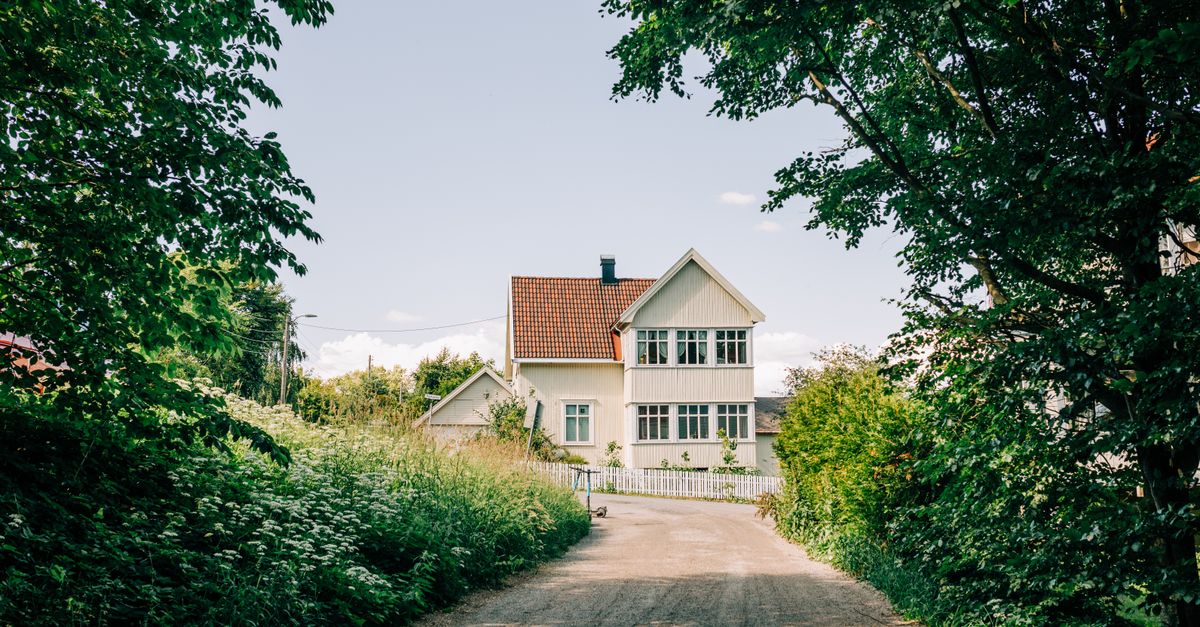
Step away from Old Unionville and the housing changes. Much of the rest of Unionville was built in the 1980s and 1990s, and it is the style many families are looking for: a two-storey detached home with a two-car garage, a lot around 40 feet, a usable yard and something in the range of 2,500 square feet, about 250 square metres, inside. Plenty of buyers take one of these, renovate the interior and stay, because the structure and the land work and only the layout feels dated. One real limit is ceiling height, often 8 feet here where a new build may be 9 or 10 feet or more, and buying that spec can mean a very large price difference. Add Downtown Markham just south of Highway 7, CF Markville nearby, the new York University campus, the Pan Am Centre and strong GO access, and you get Markham's usual price leader.
Angus Glen, Berczy and Wismer: the newer family subdivisions
If Unionville is above your budget, this is the next stop, and it is popular with families who want a newer subdivision home. Angus Glen is the best known part of it, with the Angus Glen golf course and some very large and expensive houses around it, a few with three-car garages and several thousand square feet. Not all of Angus Glen is luxury: there are sections where townhouses and semis are more common, built in the late 1990s and early 2000s, where the trees have filled in, the streets are tidy and the lawns are kept, and the feel is clearly suburban and family oriented.

One thing to check: newer does not mean wider. Even detached homes here can sit on narrower land than the older Unionville houses, because builders fit more homes into each project. North and east of Angus Glen the projects get newer again, and Unionville Village is one of the most notable, where ceilings are higher and designs more modern but lots are smaller. That is the pattern across most new GTA development: bigger buildings on smaller lots, because land costs more.
Move east to Berczy and then Wismer and the style holds: detached, semi and townhouse family homes, many local parks, quiet streets and room for kids to ride bikes. Much of it was built in the 2000s, so the trees are not Old Unionville trees yet, but it is no longer bare either, and having several parks within walking distance matters a great deal to a family with small children. On price, as of October 2026, moving from Unionville out to these areas usually opened up cheaper options, with a gap of roughly 10 to 15% between some of them, although that number shifts with property type, market timing, land and school, so treat it as a general comparison rather than a rule.

Greensborough and Cornell: where younger buyers get into Markham
Further east, Greensborough and Cornell appeal to younger families who want into Markham but find Unionville or Angus Glen too expensive. One of Greensborough's real advantages is access to Mount Joy GO station, which counts for a lot if you work downtown. Many Greensborough homes were built in the late 2000s, so the neighbourhood is relatively new, the streets are quiet and the trees are still much smaller than in the older pockets.
Cornell looks different again. Some homes borrow Victorian styling, though most are more modern builds from the 2000s. Cornell's signature is the rear-lane garage, reached from a lane behind the house instead of the street, which makes the frontage more residential and walkable but also raises density. Newer Cornell projects include many narrow three-storey homes that can hold more than 2,000 square feet inside without much width, with the parking behind, which suits a buyer who cares more about interior space than lot width or yard. Prices are usually friendlier than in central and western Markham. The trade-off is that restaurants and shops are thinner on the ground in parts of eastern Markham, so some trips need the car. Markham Stouffville Hospital is on this side, and access to Highway 407 is reasonable, especially heading south from Ninth Line, so the east is not a bad address for anyone who uses the 407 often.
Cathedraltown, Cachet, Markville, Markham Village, Box Grove and Milliken
Cathedraltown sits right beside Highway 404, and that is its biggest advantage. Someone living in eastern Markham may drive 20 or even 30 minutes just to reach the 404, while from Cathedraltown you are on the highway quickly, which matters if you commute daily. There are plenty of relatively new projects here, so if you want newer construction you have more to choose from: higher ceilings, taller basements, newer mechanical and electrical systems and newer building standards, and some projects in the area even use geothermal systems. Schools help too, with Nokiidaa Public School in the area and St. Augustine Catholic school close by. Then there is a very Canadian point: Costco. From Cathedraltown you have decent access to the Costco on the Richmond Hill side, and Markham itself has locations near Highway 7 and the 404 and near Markham Road and Fourteenth Avenue.
Cachet has two faces. In some parts you see ordinary subdivision houses, but in prime Cachet the story changes completely: homes on very large land, sometimes close to an acre, with plenty of multi-million dollar new builds. If you are looking for Markham's answer to an estate neighbourhood, Cachet is one of the main ones, along with the area around Devil's Elbow near Angus Glen, where houses are large and often fully custom. You can be a few streets apart and go from a multi-million dollar estate to a regular subdivision home. Cachet also offers good access to Highway 404.
Markville and Markham Village are older parts of Markham. Both hold a lot of older bungalows, and the lots are sometimes noticeably larger than in newer projects, which is the main reason buyers look there: bigger land in a good location, with CF Markville and Markham Stouffville Hospital not far away. Some Markham Village streets do not even have sidewalks, and small older houses there are often torn down and replaced by much larger new homes. Markham District High School is in that pocket. Box Grove to the south feels more like a subdivision, with plenty of detached, semi and townhouse product and shopping on Markham Road close enough that you do not have to go far for groceries or a restaurant. Milliken is the southern piece, with generally older houses and a well known mall just north of Steeles that many people assume is in Toronto although it sits inside Markham.
Out of that comes a simple rule about the age of Markham housing, with plenty of exceptions: the further north you go the newer the projects usually are, and the further east you go, newer again. The southern pockets carry the older houses, Unionville sits in the middle, Berczy and Wismer are newer, and the north and east hold the newest projects, with Unionville Village among the most recent developments. One number buyers forget is property tax. In recent years Markham has had a relatively low property tax rate compared with many GTA municipalities, so two homes with similar assessed values can carry different annual bills in different cities. The rate changes every year, so check the current year's rate when you buy.
So the best neighbourhood in Markham depends entirely on your priorities. Higher budget with an older neighbourhood, good land, a known school and excellent access to amenities points to Unionville. A larger and newer subdivision home points to Angus Glen. Known schools at a more reasonable price points to Berczy and Wismer. A younger family watching the purchase price should look at Greensborough and Cornell, especially if Mount Joy GO is a benefit. Fast 404 access points to Cathedraltown and Cachet, estate land to parts of Cachet and Devil's Elbow, and an older house on bigger land to Markville and Markham Village, while Milliken deserves a look if you want the southern end and good access to Toronto. In Markham the name of the neighbourhood is never enough on its own. Two houses a few streets apart can fall into different school catchments, sit different distances from a GO station, be on a narrower or a wider lot, and be decades apart in age, and those differences move the price by hundreds of thousands of dollars. Work out the lifestyle first, then the budget, then the school and the commute, and only then the neighbourhood name. If you want help doing that in order, fill out the form at the bottom of this page or book a free consultation. Stay well and take care.
Frequently asked questions
Which Markham neighbourhood is the most expensive?
Unionville is usually Markham's price leader, because it combines mature streets and larger lots in Old Unionville, Main Street Unionville and Toogood Pond, Unionville High School, Downtown Markham and CF Markville nearby, and good GO access. Individual prices go higher in prime Cachet and around Devil's Elbow near Angus Glen, where some lots approach an acre and multi-million dollar custom homes are common.
Is Thornhill considered part of Markham?
The rectangle between Yonge and Highway 404, running from Steeles in the south up to Highway 7 in the north, sits inside Markham, and that part of Thornhill is usually treated as its own area rather than as one of Markham's family subdivisions. Its housing stock, prices and streets are different enough that buyers should compare it separately.
How long is the commute from Markham to downtown Toronto?
Driving from Downtown Markham to downtown Toronto takes about 40 minutes with no traffic, and 50 minutes to an hour or more in rush hour, roughly 7 to 9 in the morning and 3 to 6 in the afternoon. On the GO Stouffville line, the ride from Mount Joy to Union Station is usually 50 to 60 minutes, and station parking lots such as Unionville GO fill up early.