
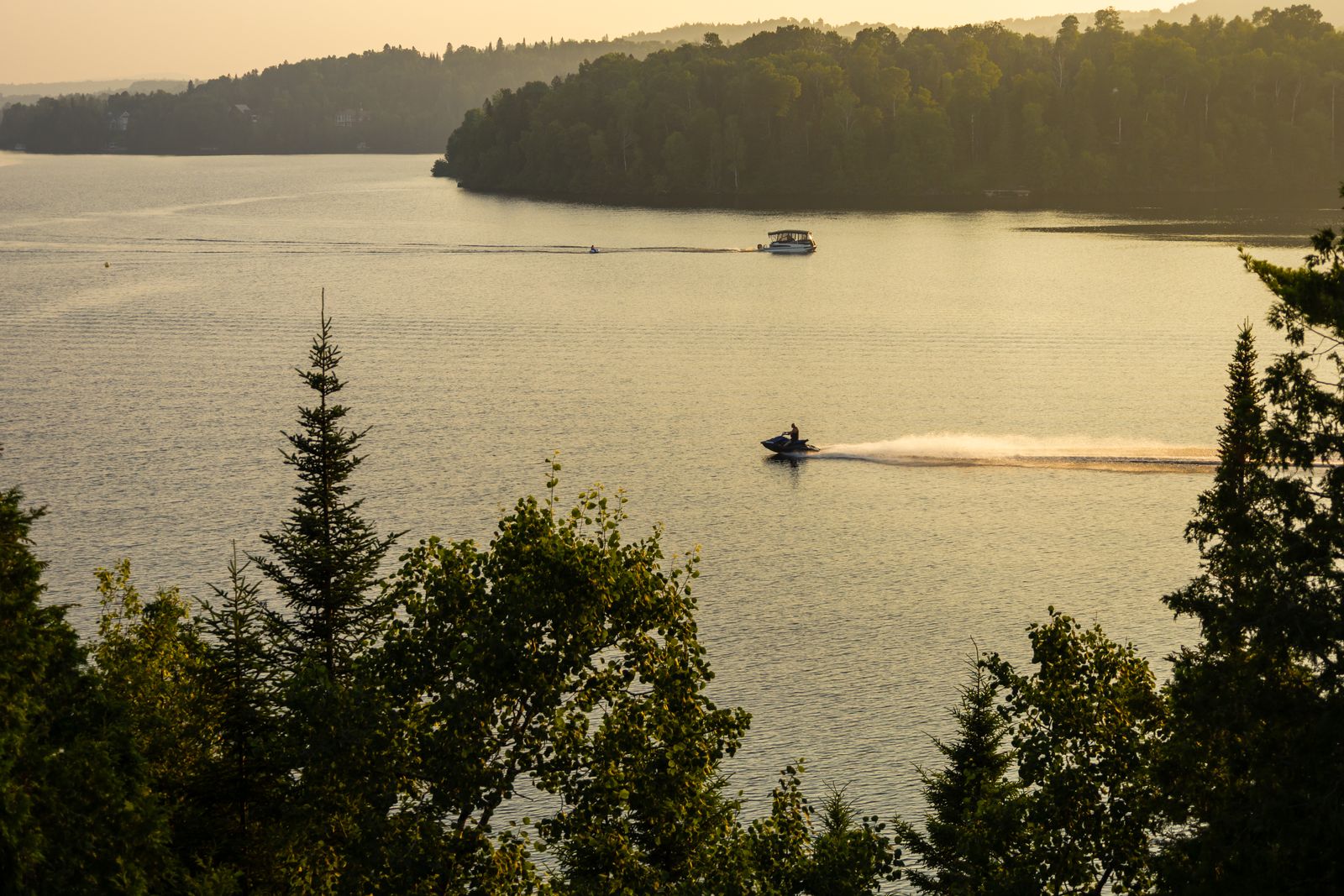
Buying waterfront in Simcoe County means checking four things a Toronto purchase never asked of you: whether the lot really reaches the water or a shore road allowance sits in between, what the conservation authority will permit on the shoreline, what the septic and well can actually support, and whether the road is a year-round road a lender will finance.
Why the Simcoe County checklist is different from Toronto's
People from Willowdale, Richmond Hill and Vaughan keep asking me the same thing: can the budget that buys a condo in North York buy a place on the water an hour and a half north? Sometimes it can. Innisfil, Big Bay Point, Wasaga Beach, Oro-Medonte, Ramara and Tiny are where those searches land, and our own website data shows people asking us about Wasaga Beach and Innisfil before we had written a word about them.

Here is the honest part. In the city you buy a lot with municipal water, a sewer and a plowed road. Up there you are buying the water system, the sewage system, the road and the shoreline, and each one can be fine or can be a problem the listing does not mention. Buyers who run the four checks below do not overpay for a property with hidden limits. They negotiate from what the paperwork says. If your real plan is a rental, read Five Keys to Spotting a Good Investment Property first, then come back to this list.
Who owns the shoreline: riparian rights and the shore road allowance
Start with the question city buyers never think to ask: do you own the land all the way to the water? The lake and the bed under it are not yours the way the lot is. What a shore owner has are riparian rights: the right to reach the water, use it, and keep others from blocking your access.

The trap is the strip in between. Many older lots on Lake Simcoe and Georgian Bay were laid out with an original shore road allowance, a strip along the water that the old surveys set aside and that the municipality may still own. If it was never closed and transferred to the lot, the dock, the boathouse and part of the lawn may sit on land that is not yours. Buying that strip is often possible, but it takes months, a survey and a lawyer, and council can say no.
What I do: ask for the survey before the offer, and have the lawyer confirm in writing whether the allowance was closed and conveyed to the lot. If it was not, that fact goes into the price or into a condition.

Conservation permits: LSRCA, NVCA and Ontario Regulation 41/24
The second check is what you are allowed to do at the water's edge. Since April 1, 2024, Ontario Regulation 41/24 under the Conservation Authorities Act has set one framework across Ontario's conservation authorities for which activities are prohibited, which are exempt and which need a permit in the areas they regulate, shorelines included.
The logic is conditional, so take it in three steps. First, find out which authority covers the lot: around Lake Simcoe that is generally the Lake Simcoe Region Conservation Authority, and on the Wasaga Beach and Nottawasaga side generally the Nottawasaga Valley Conservation Authority. Second, confirm whether the lot, or the part you care about, actually sits inside a regulated area. Not every lot does. Third, only then ask whether the specific work, a bigger dock, a boathouse, an addition toward the water, a hardened shoreline, needs a permit, had one, or is exempt.
Ask the same about what is already built. Unpermitted work in a regulated area is the seller's problem until closing and yours afterwards.
Septic, well and the winterized question
City buyers have never paid for a septic inspection or a water test, and this is where I see the most surprise. Make both conditions of the offer: a septic inspection by a licensed inspector with the tank located and pumped, and a well water test for potability plus a flow check.
Then match the system to the house. A septic system is designed for a set number of bedrooms. If the listing says five and the system was built for three, that gap is now yours. If you plan to rent the place out, the septic rating and the local short-term rental bylaw are the first two things to read, and Short Term Rentals in Ontario: Five Things to Get Right covers the rest.
Finally, winterized or seasonal: a heated water line, real insulation, a furnace rather than a wood stove and a few baseboards. A seasonal cottage is a different property with a different price, and often a different set of lenders willing to look at it.
The road and the mortgage
The fourth check decides whether you can borrow at all. A lender wants to know that you, the appraiser and the insurer can reach the house in February. That means either a municipally maintained road that gets plowed, or a private road with a written, registered private road maintenance agreement among the owners who share it.
In my experience, expect the lender and the insurer to ask both questions, and expect seasonal access to mean fewer lenders and a bigger down payment. Talk to the lender before you write the offer, not after, and have the financing condition written with the road in mind. If you are new to borrowing in Canada, How to Get a Mortgage in Canada: A Complete Beginner's Guide covers the basics.
What a working broker does with these four checks
I am Moe Asgarian, a broker with more than fifteen years in the GTA market, a Top 1% Real Estate Agent in Canada and #16 in RE/MAX Canada (Residential). Most of the families who bring me this question live in North York, Richmond Hill, Thornhill, Markham, Vaughan, Aurora or Newmarket, many of them Iranian-Canadian, and they have only ever bought where the city takes care of the pipes and the plowing. Simcoe County is not a reason to stay away. It is a reason to read the paperwork in a different order: survey, conservation authority, septic and well, road, and only then the kitchen.
If you are looking at Innisfil, Wasaga Beach or anywhere along the Simcoe shore, fill out the form at the bottom of the page or book a free consultation, and we will walk the four checks against the actual listing documents before you write the offer. There is more in our neighbourhoods guides. Stay well and take care.
Frequently asked questions
How do I know if I actually own the shoreline of a Lake Simcoe property?
Ask for the survey before you make an offer and have your lawyer confirm whether an original shore road allowance runs along the water and whether it was ever closed and conveyed to the lot. If it was not, that strip may still belong to the municipality, even if the dock sits on it.
Do I need a conservation authority permit to build or replace a dock in Simcoe County?
It depends on whether the lot sits in an area regulated by a conservation authority. If it does, the rules on what is prohibited, exempt or permitted come from Ontario Regulation 41/24, in force since April 1, 2024. Ask LSRCA or NVCA whether your lot is regulated and whether the specific work needs a permit or is exempt.
Can I get a regular mortgage on a cottage on a private or seasonal road?
It is harder. Lenders want year-round access, either a municipally maintained road or a private road with a written, registered private road maintenance agreement. Talk to your lender before you write the offer and build the financing condition around the road.