
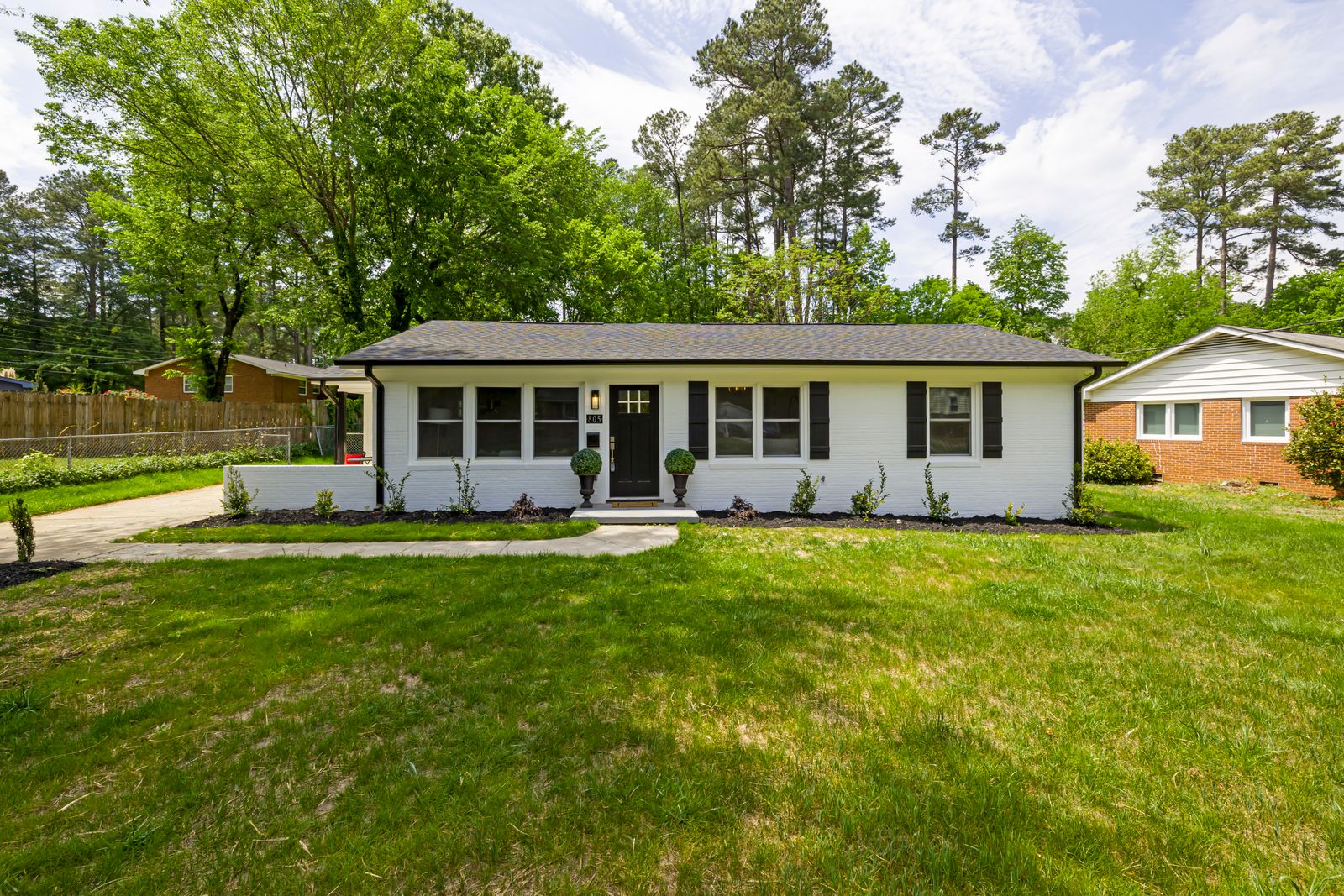
No, not always. In Ontario anyone can walk into a public open house without an agent. For a private showing you can ask the listing brokerage directly, but it is not guaranteed: the listing agent works for the seller and may ask for ID or a pre-approval first. Whatever you tell that agent can go to the seller.
Open houses and private showings are two different doors
Buyers write to us saying, in so many words, 'we are not under contract with any brokers.' Behind that line there is usually a simple question: can I just go and see the house? You can. But there are two doors in Ontario, and they open in different ways.

The first door is the public open house. It is open to everyone. You do not need an agent, you do not need a contract, and nobody can make you sign one to walk through. You may be asked to put your name on a visitor sheet. That sheet is the seller's record of who came into their home. It is not a representation agreement.
The second door is the private showing, and that one is booked through the listing brokerage. If you have your own agent, your agent books it and takes you in. If you do not, you ask the listing agent, who takes instructions from the seller. A listing agent may ask a stranger for photo ID or a mortgage pre-approval letter before opening someone's home, and some are slow to reply. So can you see that exact house on Saturday? At an open house, yes. By private appointment on your own, maybe.
What you say at the door can reach the seller
Here is the part most buyers miss. The agent who opens the door works for the seller. Their job is to get the seller the best price and terms, however friendly the conversation feels.
Ontario made this explicit. Since December 1, 2023, under the Trust in Real Estate Services Act, 2002, known as TRESA, there is no middle category called 'customer' anymore. You are either a client of a brokerage or a self-represented party, and a self-represented party gets no opinions and no advice from the seller's agent. As of September 2026 that is still the rule. It applies the same way to a condo in North York or Willowdale and to a detached house in Richmond Hill, Thornhill, Markham, Vaughan, Aurora or Newmarket. It is Ontario law, not a local custom.

I work on both sides of this door, as a listing agent and as a buyer agent, so I know the rule from the inside. If an unrepresented visitor asks a listing agent, 'Is it worth the asking price?' or 'Would they take less?', that agent is not allowed to answer as the visitor's adviser. And if the visitor shares a budget or a deadline, the agent's duty is to the seller. So look at the home and ask factual questions about it. Keep your maximum price, your reasons for moving and your timeline to yourself.
The self-represented party form, in plain words
Walking through an open house does not trigger any paperwork. The paperwork comes in once you ask the listing brokerage for services or assistance, such as a private showing or help with an offer. At that point the agent has to give you the RECO Information Guide (RECO is Ontario's real estate regulator) and a form called Information and Disclosure to Self-represented Party.

People worry that acknowledging this form ties them to that agent. It does not. It is not a representation agreement. It is a disclosure: you understand that this agent works for the seller and will not advise you. The form is not the risk. Going through a negotiation with nobody on your side is the risk.
Will skipping a buyer agent save you the commission?
A common belief among buyers goes like this: if I have no agent, the seller saves the buyer agent's share, so the price comes down. It sounds logical. It is not how it works.

There is no automatic discount. Commission is set in the listing agreement between the seller and the listing brokerage. You are not a party to that contract and you cannot see it. Any saving is uncertain, and you would have to negotiate it yourself, against a professional whose job is to protect the other side. What you lose is certain and immediate: advice on what the home is worth, which conditions protect you, and how to negotiate. I explain the money side in detail in How a Toronto Real Estate Agent Actually Earns a Living (see /blog/how-a-toronto-real-estate-agent-really-earns).
When to bring in your own agent
My advice is simple. Go to open houses on your own, early, as often as you like. That is what they are for. You learn the neighbourhoods and your own taste, and it costs you nothing as long as you keep your numbers private.
Bring in your own agent before you start requesting private showings on homes you could really buy, and always before any conversation about price. If you do not know how representation or compensation works, you are in good company. Most buyers who contact us do not, and a first meeting is a conversation, not a contract. How to Choose a Real Estate Agent in Toronto (see /blog/how-to-choose-a-real-estate-agent-in-toronto) will help you pick well, and How to Buy a Home in Toronto: A Step-by-Step Guide for Beginners (see /blog/how-to-buy-home-toronto-beginners-guide) shows where viewings fit in the whole process. More guides are on our buying and selling hub (/blog/topics/buying-and-selling).
I am Moe Asgarian, a RE/MAX broker with 15+ years in the GTA market, and I work as both a listing agent and a buyer agent. If you are not under contract with anyone and want to understand your options before you book showings, fill out the form at the bottom of the page or book a free consultation. Stay well and take care.
Frequently asked questions
Do I have to sign a form to go to an open house in Ontario?
No. A public open house needs no agent and no contract. You may be asked to sign a visitor sheet, which is the seller's record of who came in, not a representation agreement. The self-represented party disclosure comes in when you ask the listing brokerage for services or assistance, such as a private showing.
Can a listing agent refuse to show me a house if I have no agent?
The listing agent acts on the seller's instructions and can set terms for showings, such as asking for photo ID or a mortgage pre-approval letter. A private showing on your own is possible but not guaranteed. Having your own agent book it is the reliable route.
Does signing the self-represented party form tie me to that agent?
No. The form is a disclosure that you are not that agent's client and that the agent works for the seller. It is not a representation agreement and it does not commit you to that brokerage.
Read us often? Add Team Asgarian to your preferred sources on Google. (opens in a new tab)